Window treatments do more than block the sun. They set the mood of a room, frame the view, and tie your whole design together.
In the mountains, that matters even more. Our homes are full of natural light, wood, stone, and big Blue Ridge views. The right color and style can make all of that look better.
At AVL Window Blinds, we help homeowners from Weaverville to Hendersonville choose treatments that fit their homes. Here’s a quick look at how window design got where it is, and how to choose well today.
How did window treatments evolve over time?
Window treatments started as simple protection and slowly became a form of decoration. Looking back helps explain why color and design matter so much now.
Ancient origins: practical and beautiful
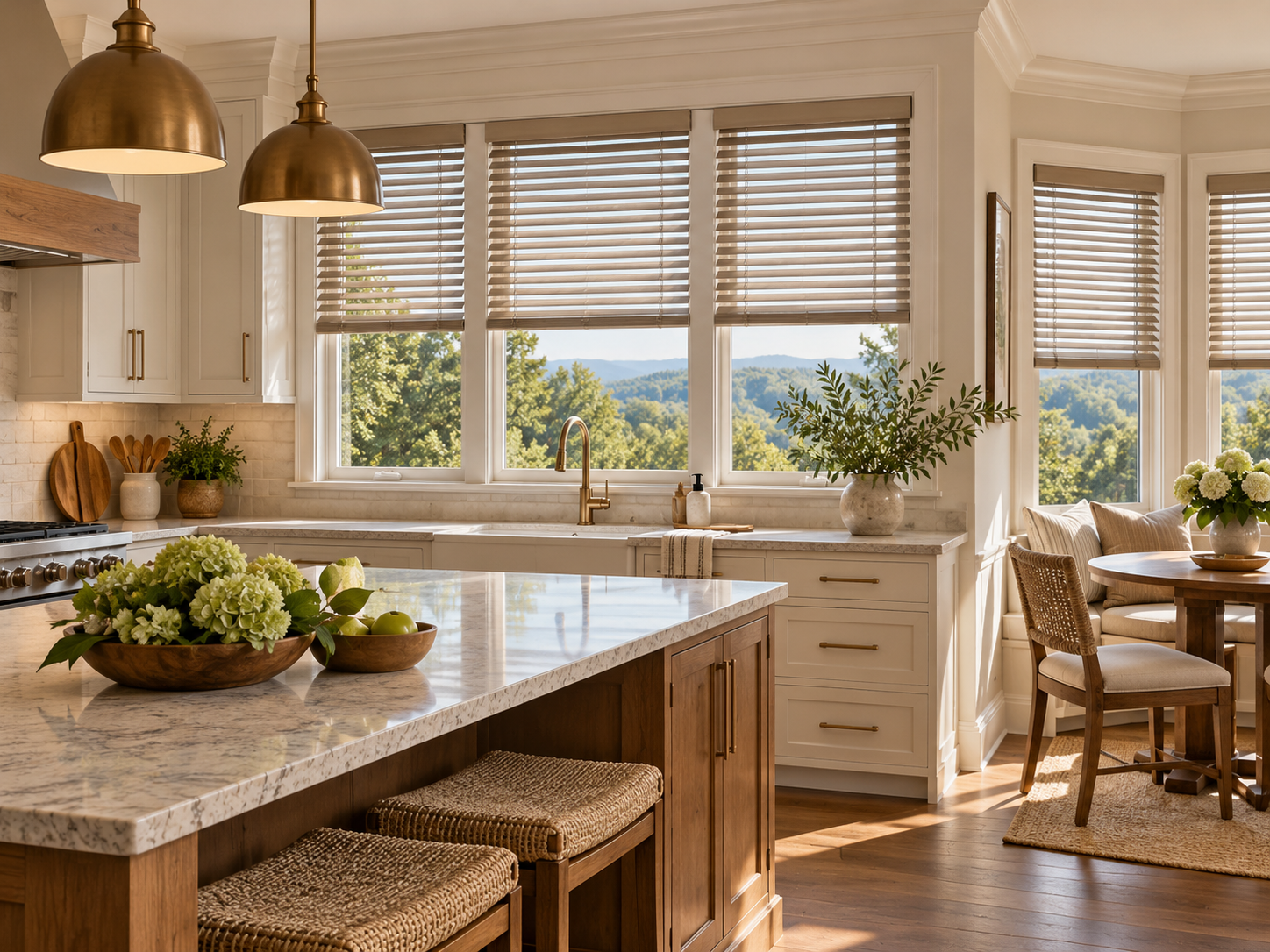
Early window coverings were made from materials like animal hides, woven reeds, and cloth. They kept out weather and heat. Even then, people noticed that natural textures added warmth to a space. That idea still shows up in today’s woven wood shades.
Renaissance elegance: drapes with drama
In the Renaissance, wealthy households used rich fabrics like silk and velvet. Heavy drapes and valances showed off status and style. This is when window dressing became a design statement, not just a necessity.
The Industrial Revolution: simple and effective
Factories made window treatments easier to produce and easier to afford. Roller shades and blinds became popular because they gave people privacy and control over light. Style started meeting usefulness.
Mid-century playfulness: color takes over
The 1960s and 1970s brought bold colors and geometric patterns into homes. Window treatments joined in. Many mid-century homes around Hendersonville and Black Mountain still carry that spirit, with clean lines and warm, earthy palettes.
Today: more choices than ever
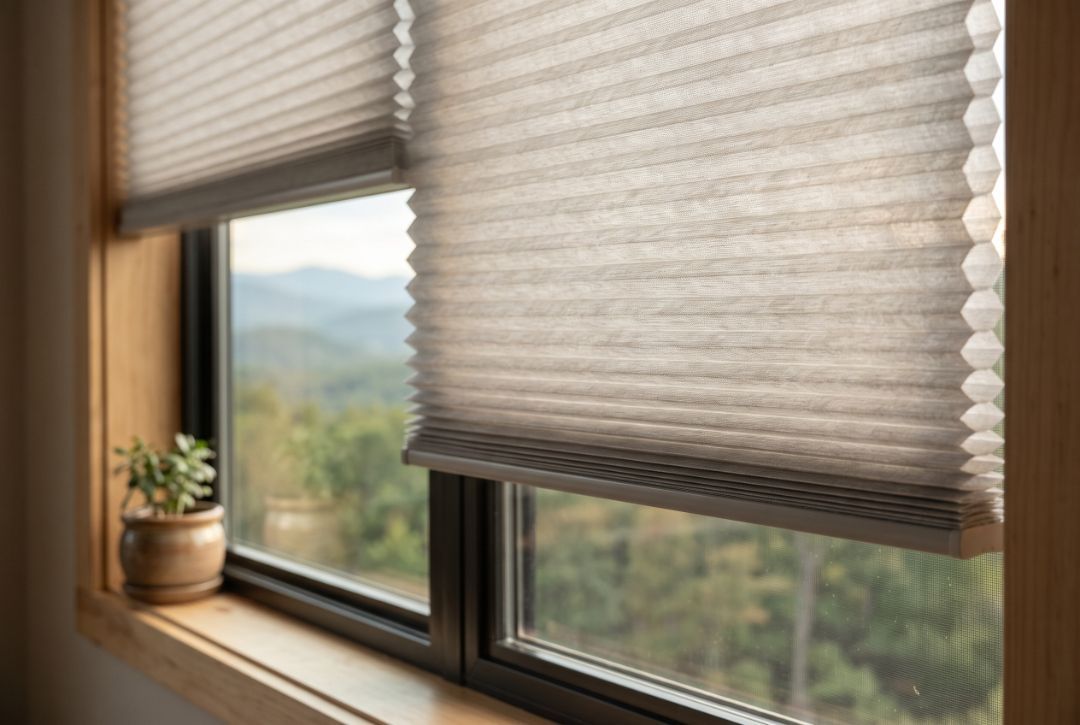
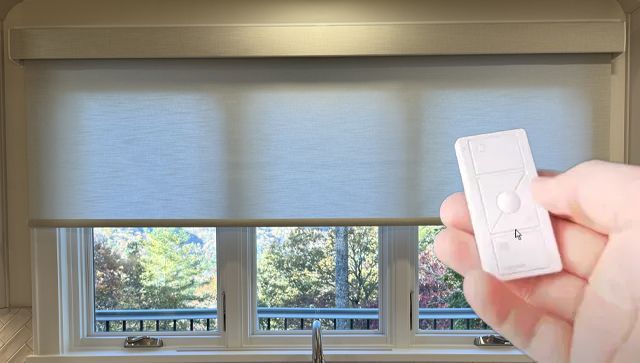
Now you can choose anything from sheer, light-filtering shades to custom wood blinds and motorized roller shades. That’s great news, though it can also feel like a lot to sort through.
How does color affect a room?
Color sets the mood before anyone notices the details. Neutral tones like cream, soft gray, and warm white make a room feel calm and open. Bold colors add energy. Subtle patterns and textures add depth without overwhelming the space.
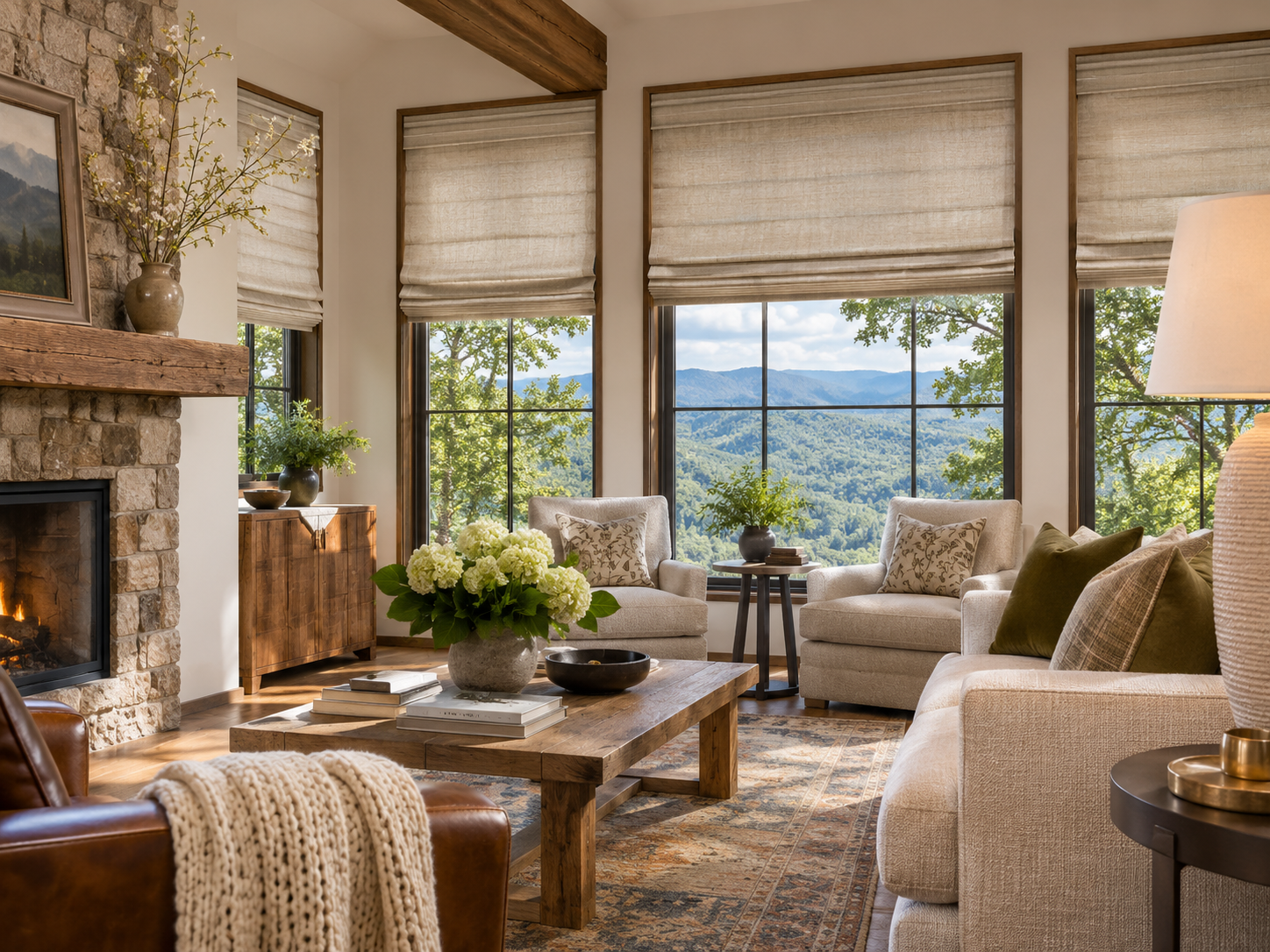
In a mountain home, we often take our cues from outside. Greens, browns, stone grays, and sky blues blend with the landscape. They help your shades look like part of the view instead of competing with it.
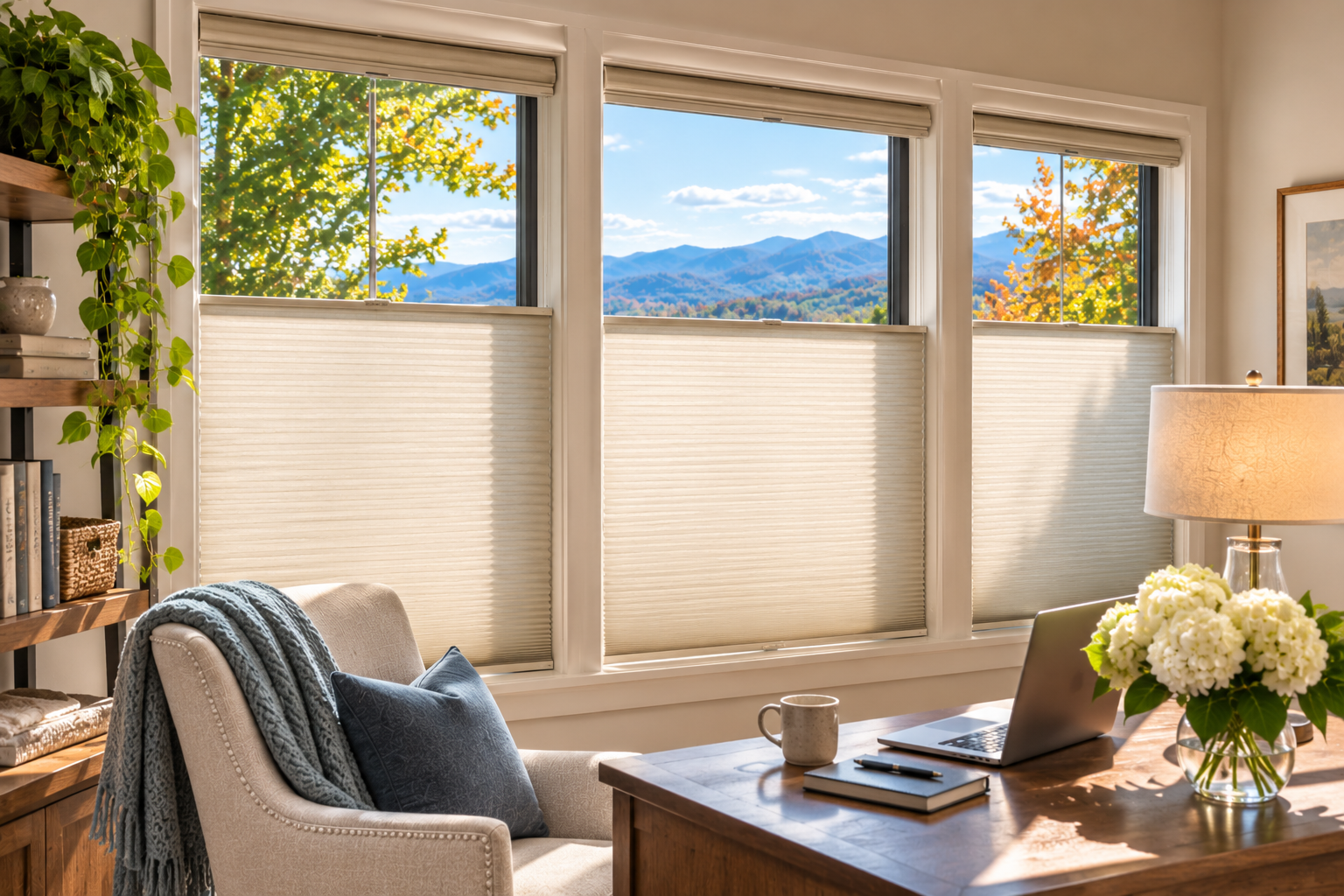
Color also affects how much of your view you see. For a window with a big mountain scene, a darker shade fabric can cut glare and help the view show through more clearly. A lighter fabric brightens the room and spreads soft light. We’ll show you samples at your windows so you can see the difference in your own light.
Want to see colors in your own home?
Schedule a free in-home consultation and we’ll bring Norman samples to your windows.
How do I match window treatments to my home’s style?
Start with your home’s character, then choose the treatment that suits it. Here are a few examples from homes we see around Western North Carolina.
- Craftsman bungalows (Black Mountain, Montford): Real wood blinds and woven wood shades echo the warm wood trim.
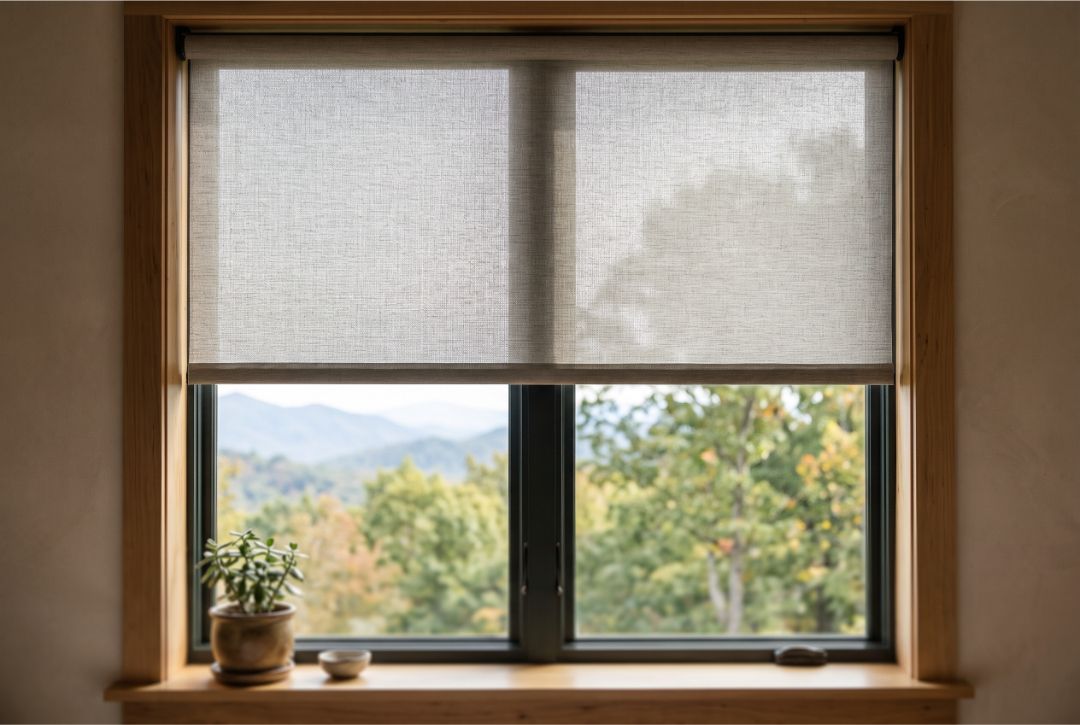
- Modern mountain homes (Fairview, Fletcher, Arden): Clean roller shades and sleek motorized options keep the look simple.
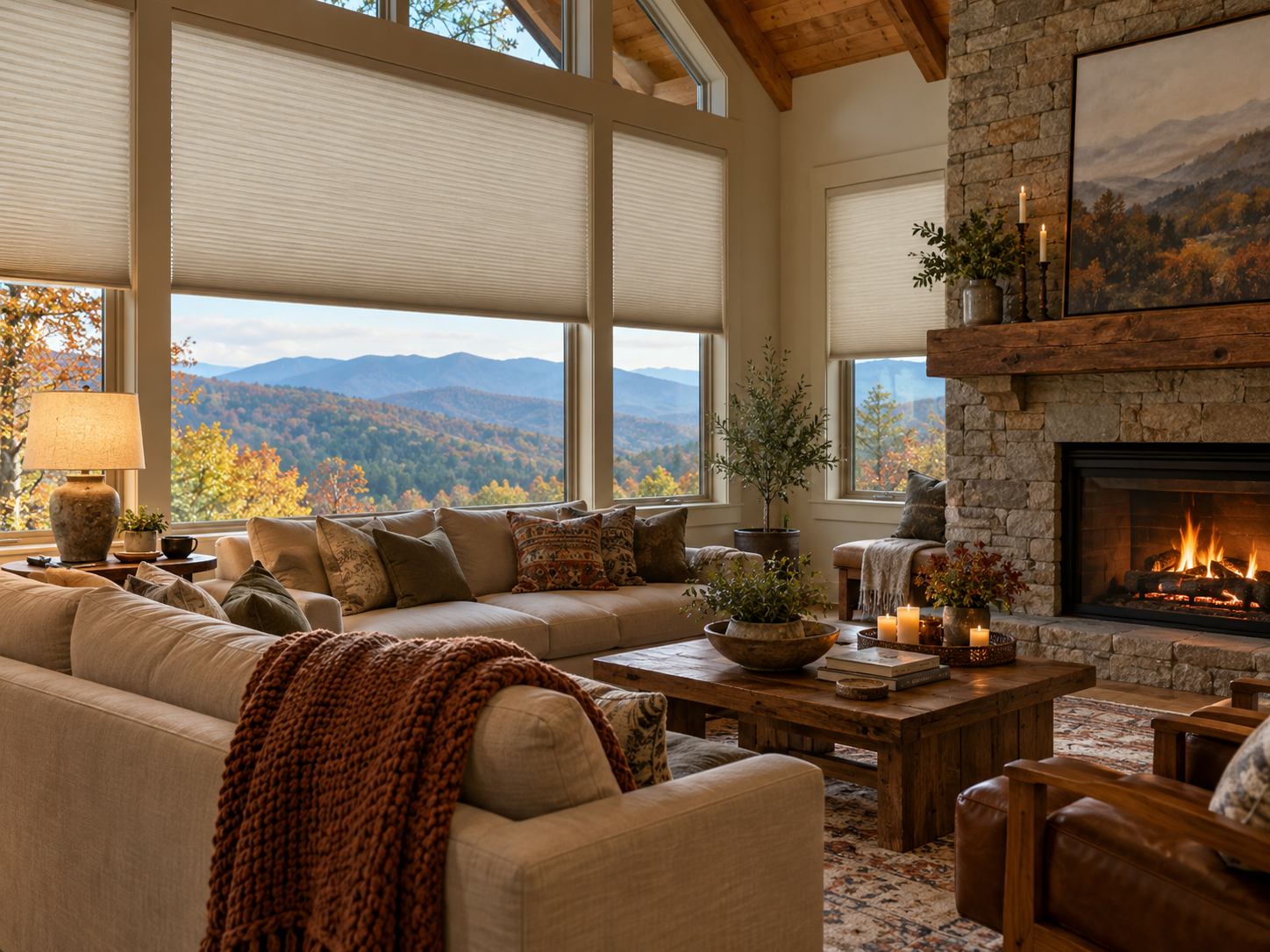
- Timber-frame and log homes (Weaverville, Marshall): Natural textures and earth tones feel right at home.
- Upscale view homes (Biltmore Forest, Mills River): Custom shades and plantation shutters add a polished finish.
Remember, your room’s style is only part of the picture. Light, privacy, and daily habits matter too.
How do I choose the right window treatment for each room?
Think about what each room needs, then pick the style and color to match. Function and beauty should work together.
- Teen and kids’ rooms: Room-darkening shades help with sleep, and cordless options keep things safe and simple.
- Sunrooms and sunny rooms: Energy-efficient shades control heat and protect floors and furniture from fading.
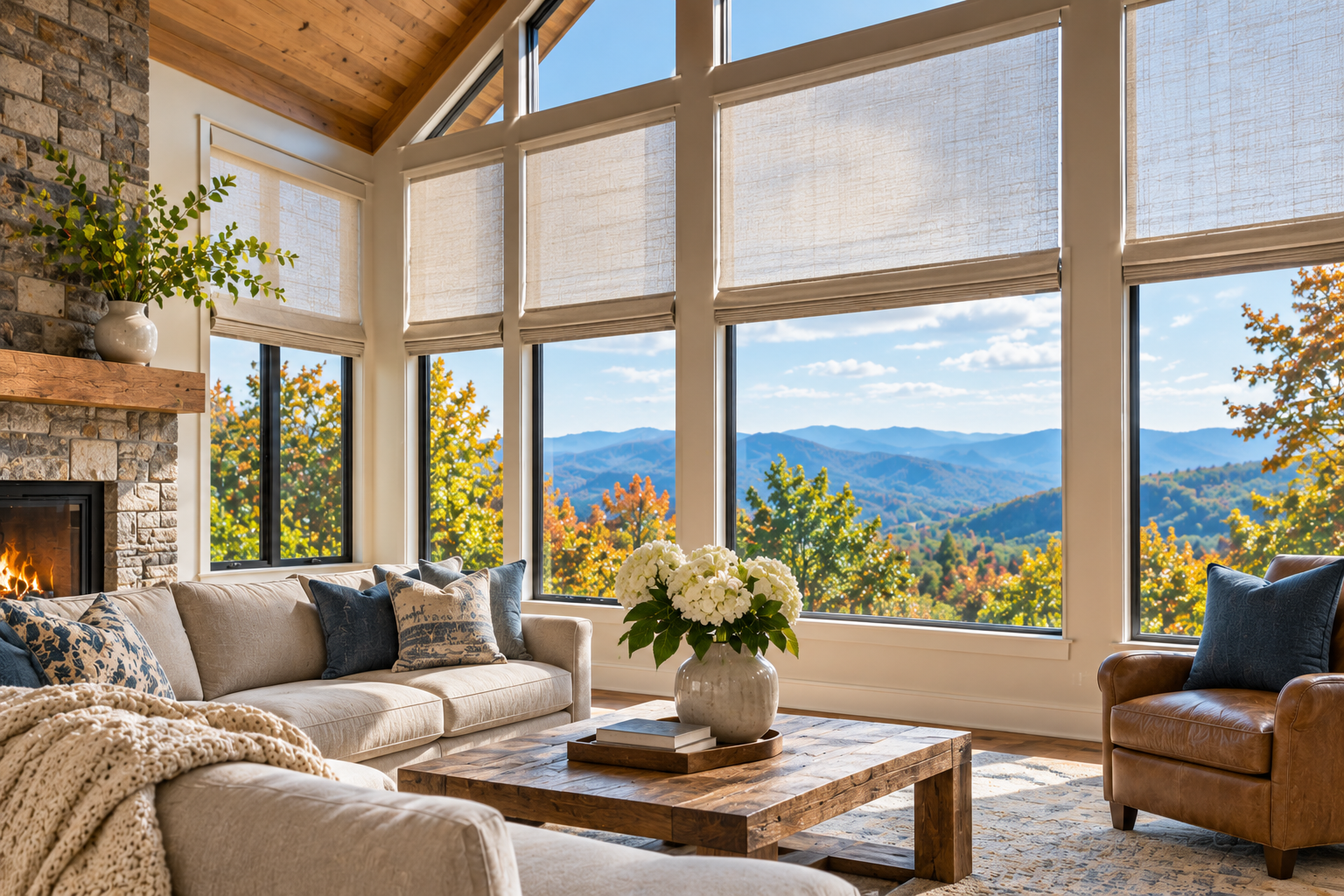
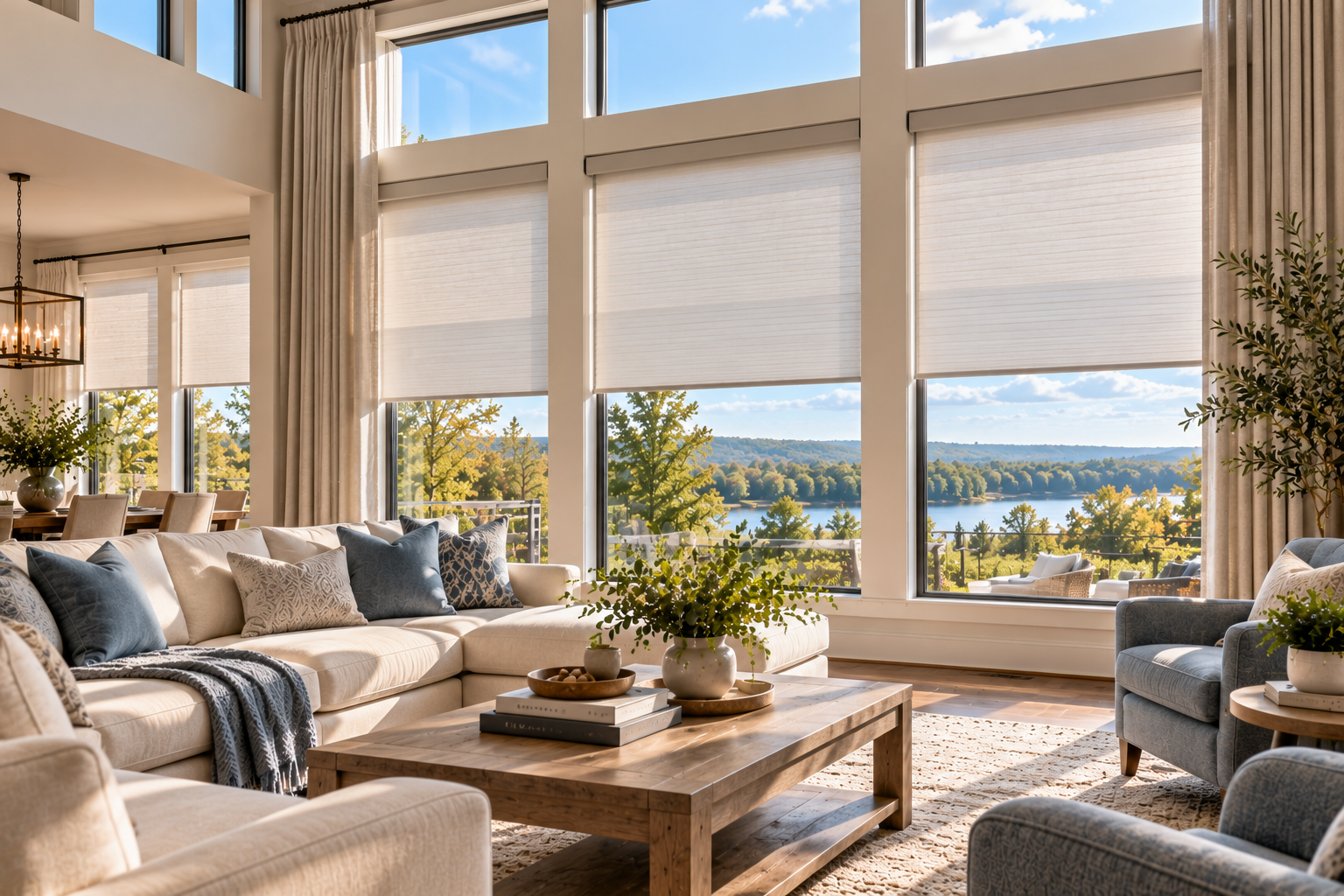
- Living rooms with views: Light-filtering or solar shades keep the Blue Ridge in sight while cutting glare.
- Bedrooms: Blackout honeycomb shades add darkness and warmth for better rest.
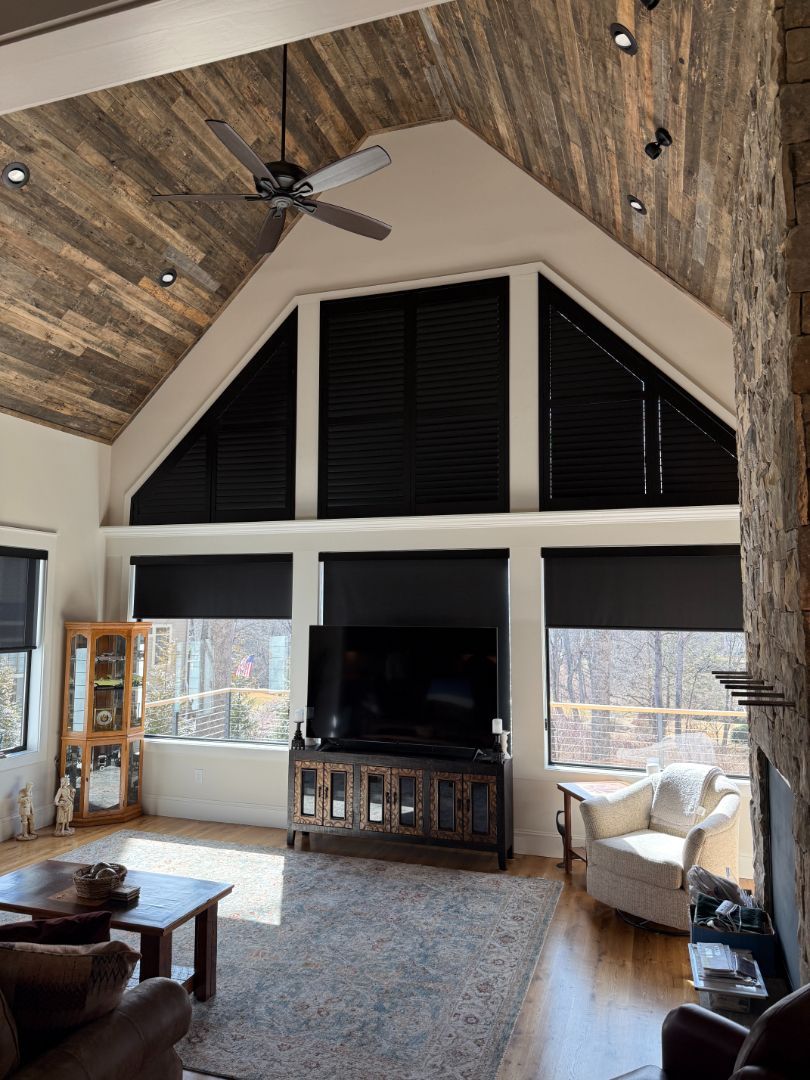
- Odd-shaped windows: Arched, angled, and oversized windows often need custom solutions. This is common in older homes and mountain builds.
If you have a tricky window, don’t settle for a standard fit. We measure every window and design for it.