Best Window Treatments for Sliding Glass Doors
A Complete Guide to Window Treatments for Sliding Glass Doors
The best window treatments for sliding glass doors combine easy operation, privacy, light control, and a clean appearance without making it difficult to use the door. In 2026, leading options include SmartDrape® shades, panel track shades, roller shades, and updated vertical blinds.
Sliding glass doors create a different design challenge than standard windows. They are wide, frequently used, and often connect an important living space to a patio, deck, or mountain view.
That means the right treatment needs to do more than cover the glass. It should move naturally with the door, stack neatly when open, and give you control over sunlight and privacy without overwhelming the room.
For Western North Carolina homeowners, there is another consideration: the view. AVL Window Blinds helps homeowners choose sliding glass door treatments that provide practical coverage while keeping outdoor scenery connected to the interior.

What Are the Best Window Treatments for Sliding Glass Doors?
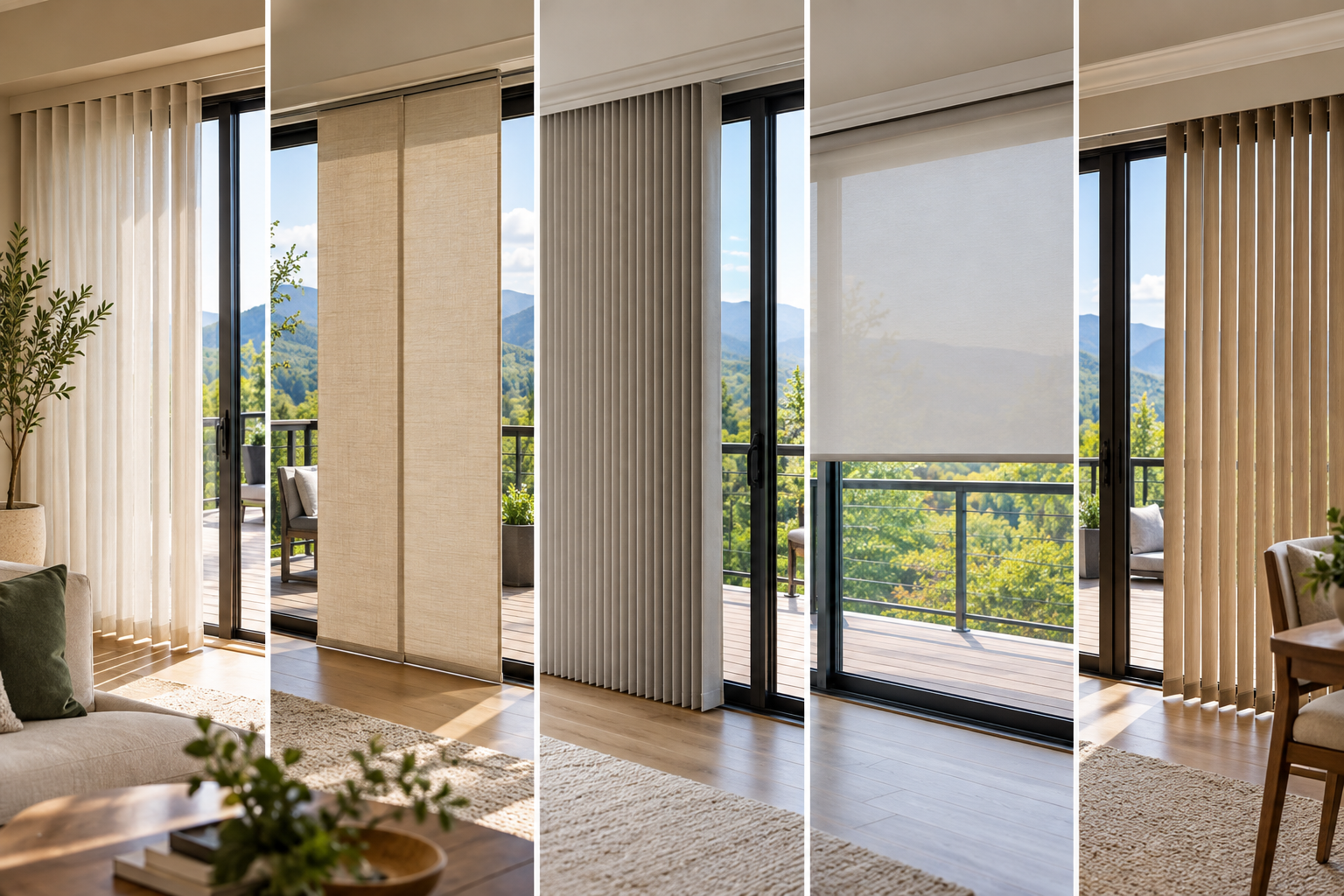
The best window coverings for sliding glass doors are treatments designed for wide openings and easy side-to-side access. SmartDrape® shades, panel track shades, vertical cellular shades, roller shades, and modern vertical blinds are among the most practical choices.
Each option solves the problem differently.
For a door that is used several times a day, a vertical treatment often makes the most sense because it moves in the same direction as the sliding door. A treatment that stacks to the side can also provide almost complete access to the glass when open.
Horizontal treatments can work well too, especially when design simplicity matters more than side-to-side operation.
The main options include:
- SmartDrape® shades
- Panel track shades
- Vertical cellular or honeycomb shades
- Roller shades
- Modern vertical blinds
- Sheer vertical treatments
Norman® specifically recommends both vertical and horizontal shade styles for sliding doors. Its current sliding-door collection includes SmartDrape® shades, Portrait vertical honeycomb shades, roller shades, sheer shades, and Roman shades.
The best choice depends on how often you open the door, how much privacy you need, and how much of the view you want visible when the treatment is open.
Is SmartDrape® a Good Choice for Sliding Glass Doors?
Yes, SmartDrape® is an especially good choice for sliding glass doors when you want soft fabric, easy walk-through access, and better control over the view.
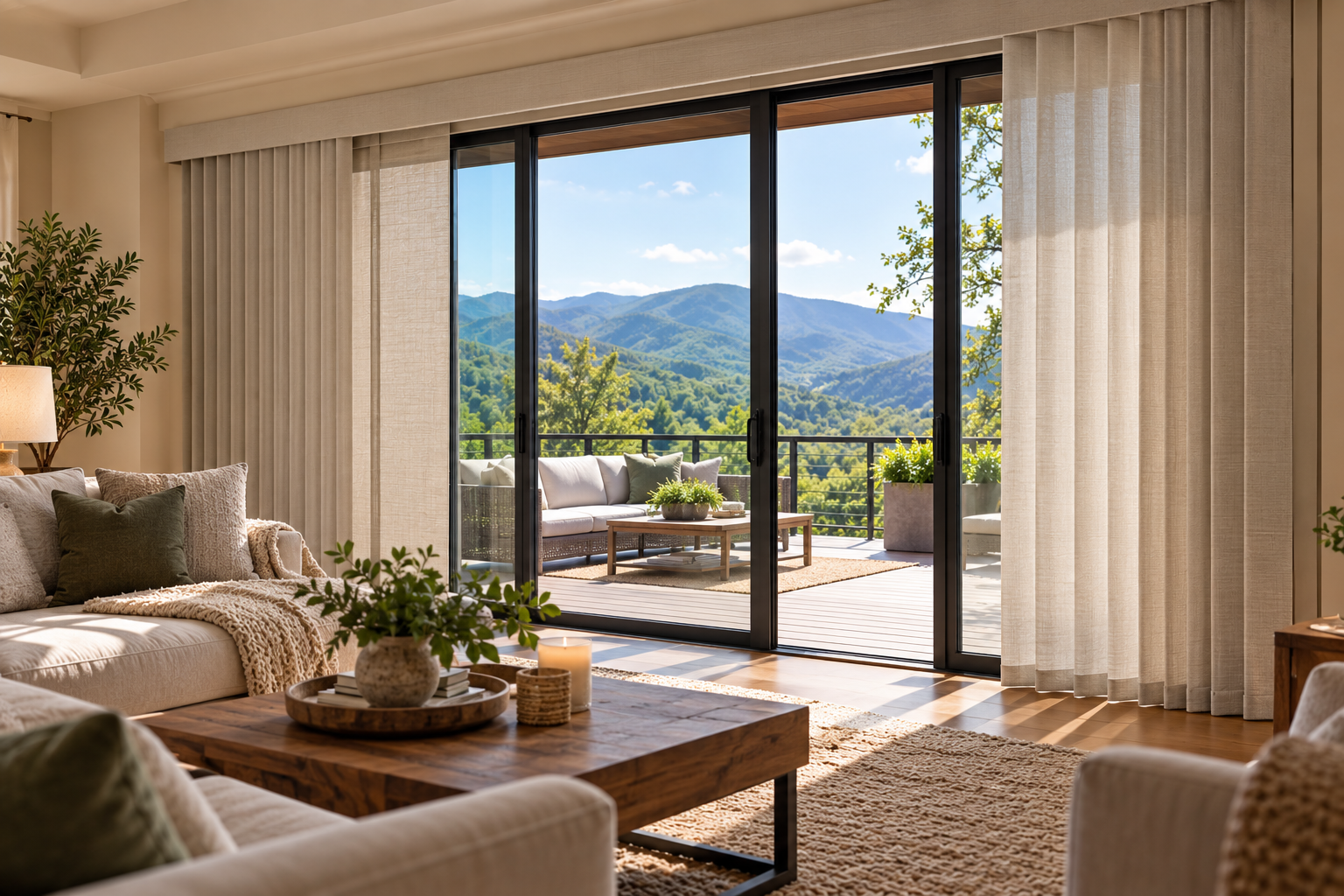
Unlike traditional vertical blinds, SmartDrape® uses individual fabric vanes. The treatment moves horizontally across the opening while allowing people to pass through the vanes without fully opening the shade.
That can work beautifully in a great room or primary living area where a patio or deck door is part of the architecture rather than something you want to conceal.
SmartDrape® also provides a softer appearance than hard vertical blinds. When the vanes are open, daylight and the outdoor view remain visible. When they are closed, the treatment provides more privacy and light control. Norman® describes SmartDrape® as having a flow-through design created for seamless indoor-outdoor living.
This can make SmartDrape® particularly appealing for:
- Great rooms with large patio doors
- Mountain homes with scenic views
- Open-concept living spaces
- Frequently used deck entrances
- Rooms where traditional vertical blinds feel too commercial
- Homeowners who prefer fabric over hard slats
For a home overlooking the Blue Ridge Mountains, the right vertical blind replacement should provide privacy and light control without competing with the view.
SmartDrape® helps keep the focus where it belongs—on the scenery outside.
Can Roller Shades Work on Sliding Glass Doors?
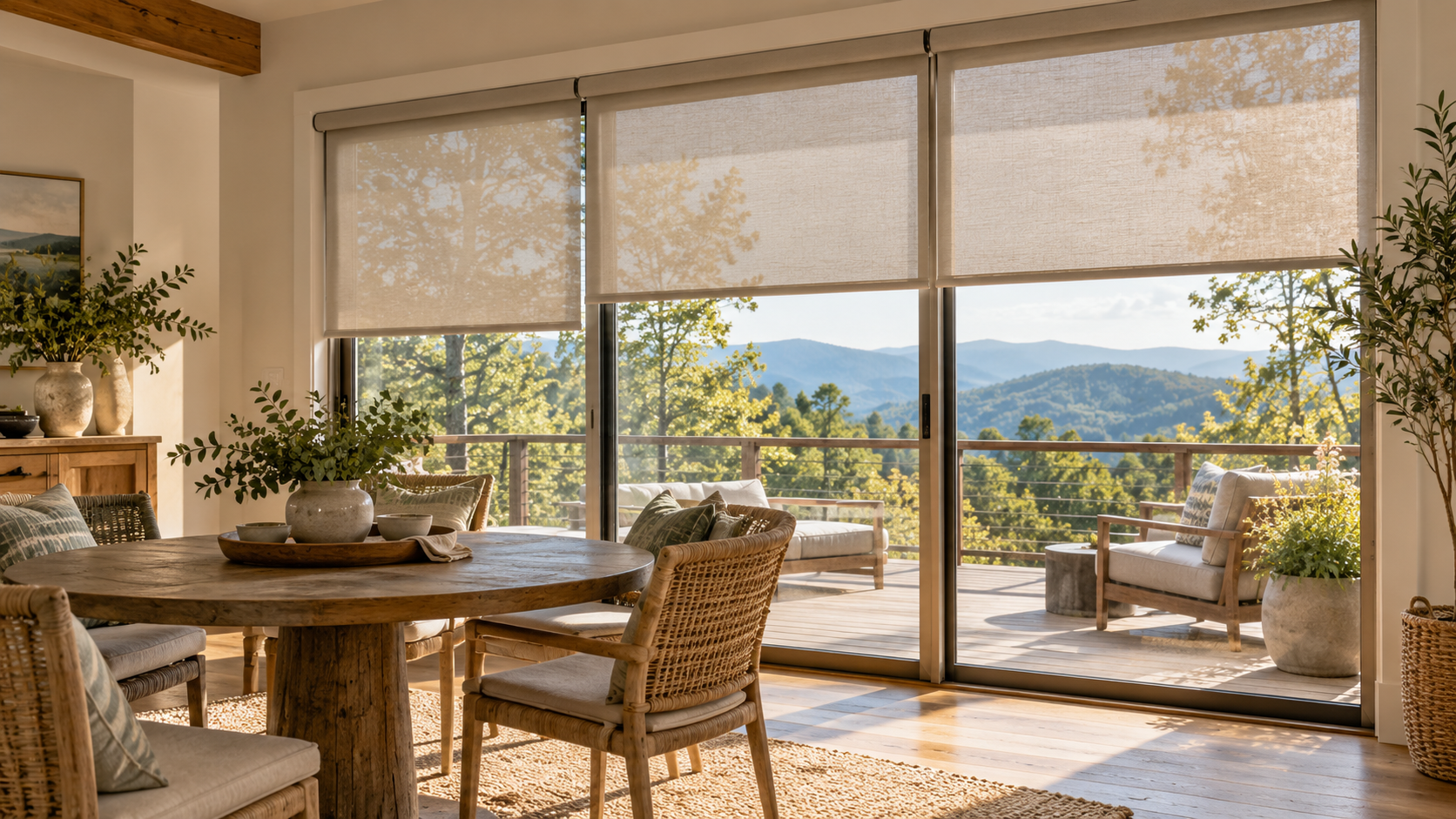
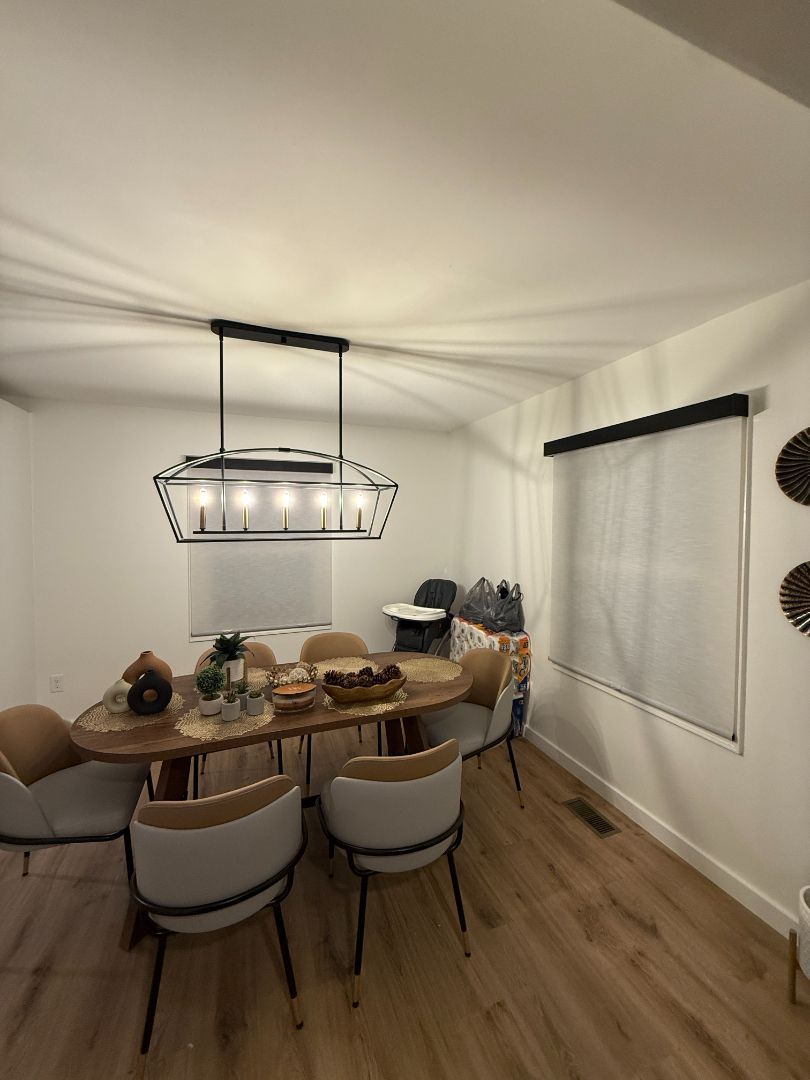
Yes, roller window shades can work very well on sliding glass doors, particularly when you want a streamlined treatment that almost disappears when raised.
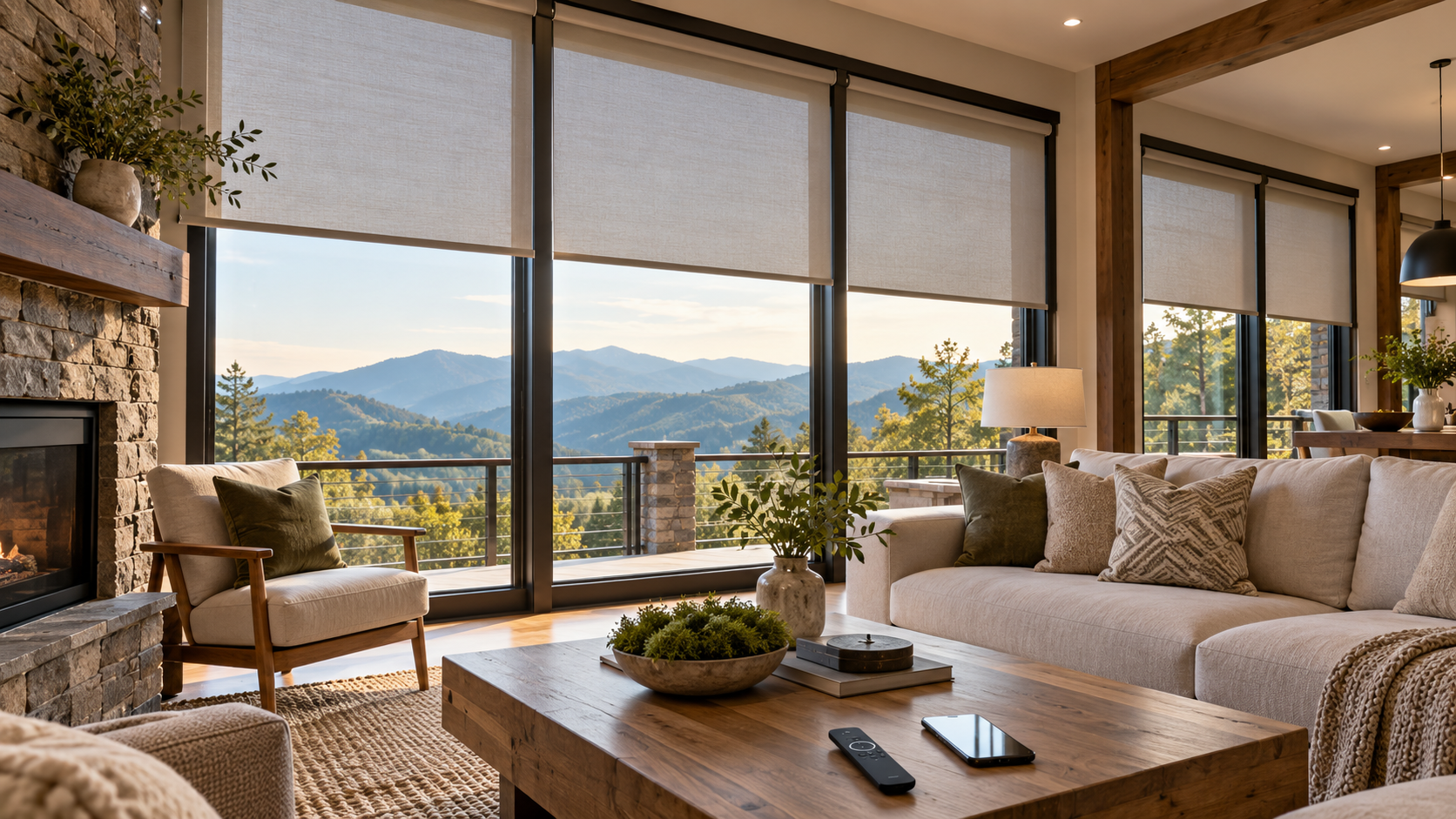
Roller shades operate vertically rather than side to side. For a large sliding door, they may be installed as one broad shade or divided into separate shades across different sections of glass.
The advantage is visual simplicity.
When raised, the fabric rolls neatly at the top instead of stacking beside the door. That leaves the glass open and keeps the room feeling uncluttered.
Roller shades can also provide different levels of light control:
- Solar fabrics reduce glare while preserving some exterior visibility.
- Light-filtering fabrics soften daylight and provide daytime coverage.
- Room-darkening fabrics offer greater privacy.
- Blackout fabrics provide stronger light blocking where needed.
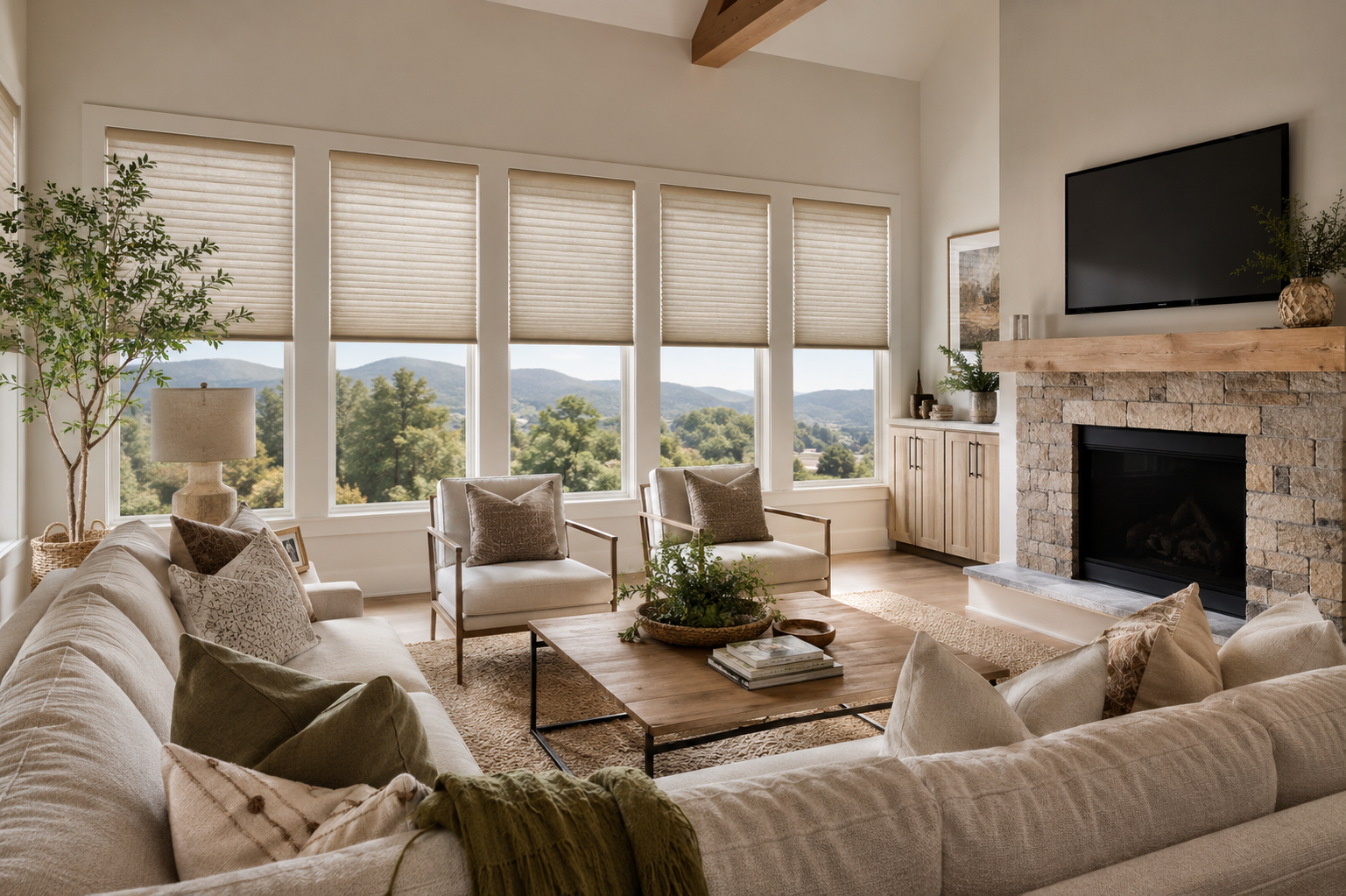
For a room with a valuable mountain or wooded view, solar roller shades can be especially appealing. They reduce harsh sunlight without completely disconnecting the room from the outdoors.
The tradeoff is operation. If the shade is lowered across the active portion of the door, you generally need to raise it before walking outside.
That makes roller shades a better fit for doors that are not constantly being opened and closed.

Find the Right Treatment for Your Sliding Glass Doors
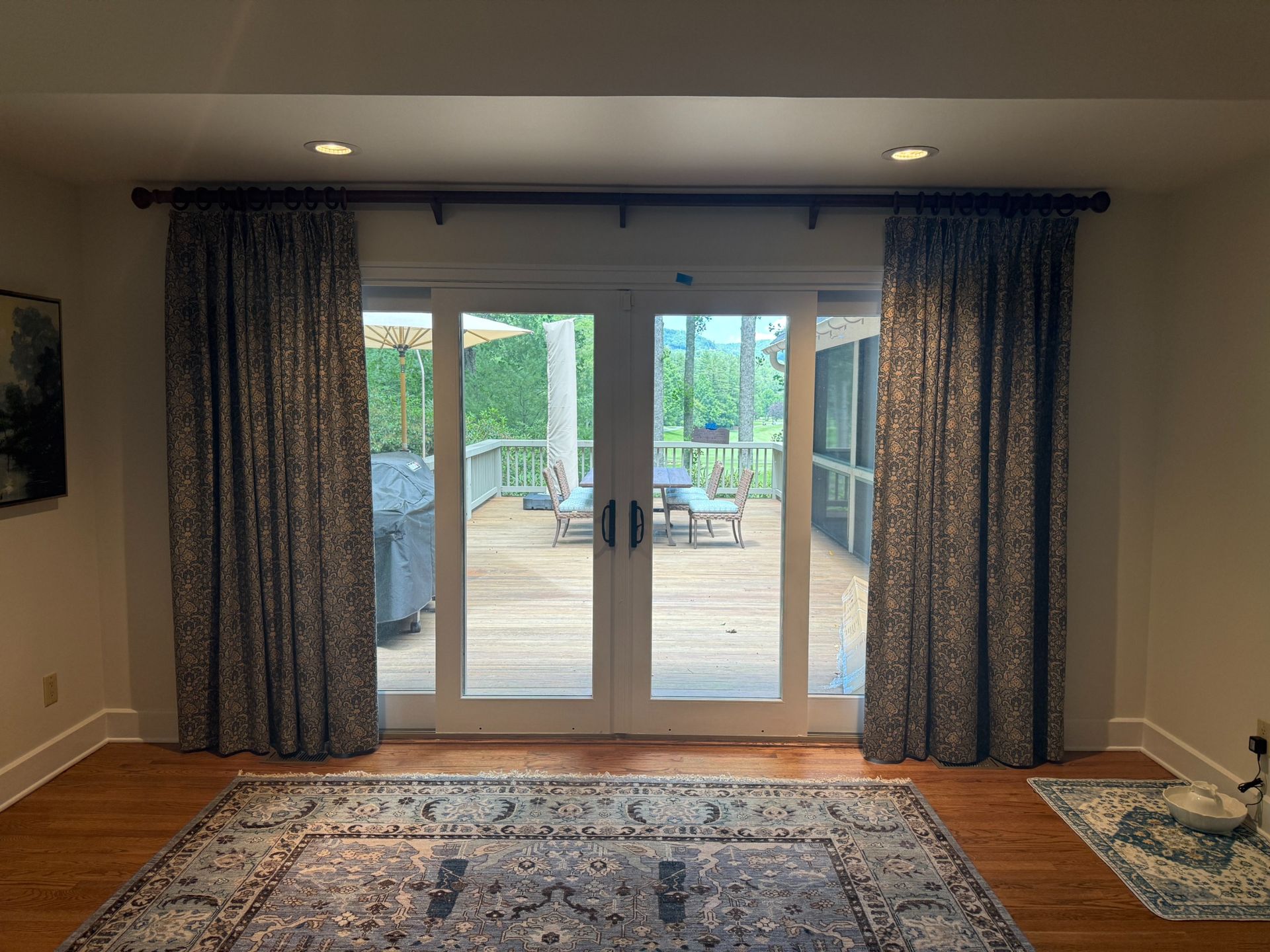
Sliding glass doors deserve a window treatment designed around the way the room works, not simply a larger version of a standard blind.
AVL Window Blinds helps Western North Carolina homeowners compare custom sliding door shades, blinds, and specialty treatments based on privacy, sunlight, energy efficiency, daily access, and the surrounding view.
Schedule an in-home consultation with AVL Window Blinds to explore sliding glass door window treatments that look intentional, operate smoothly, and complement your home.
FAQs About Window Treatments for Sliding Glass Doors
Q: What is the most popular window treatment for a sliding glass door?
A: SmartDrape®, panel tracks, vertical shades, and roller shades are all popular choices for sliding glass doors. The best option depends on how frequently the door is used, your privacy needs, and the style of the room.
Q: What can I use instead of vertical blinds on a sliding glass door?
A: Panel track shades, SmartDrape® shades, vertical cellular shades, and roller shades are common alternatives to traditional vertical blinds. Each provides a different balance of access, privacy, light control, and appearance.
Q: Are cellular shades good for patio doors?
A: Yes, vertical cellular shades are a strong patio-door option because they move side to side and provide additional insulation near the glass. Their honeycomb construction traps air, which can help reduce heat transfer.
Q: Can sliding glass door shades be motorized?
A: Some sliding-door window treatments can be motorized, although available operating systems depend on the product and size of the opening. Motorization can be especially useful for large treatments or homes where automated light control is part of a broader smart-home system.
Q: What is the best window treatment for preserving a mountain view?
A: Roller shades, SmartDrape® shades, and treatments with a compact stack can work especially well when preserving the view is important. The goal is to reduce glare and add privacy when needed while keeping as much glass exposed as possible when the treatment is open.